



Different cultures and traditions unite
Last year, Senaki, a major transport hub in Western Georgia where highways converge, celebrated its 150th anniversary. During the Soviet era, a significant Russian-speaking population lived here, but over time, their number has dwindled significantly. A "KP Georgia" correspondent visited this economic and commercial hub of the Samegrelo-Zemo Svaneti region.
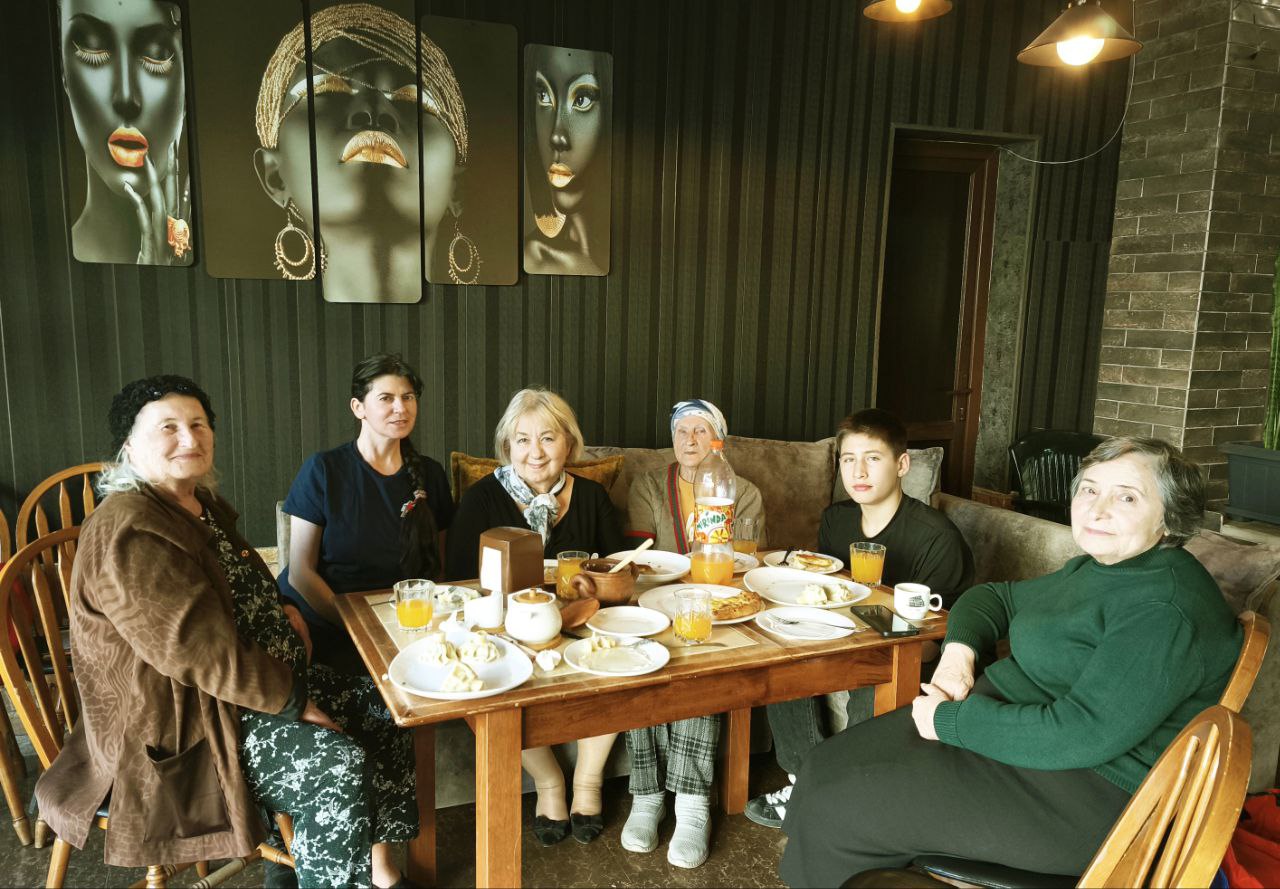
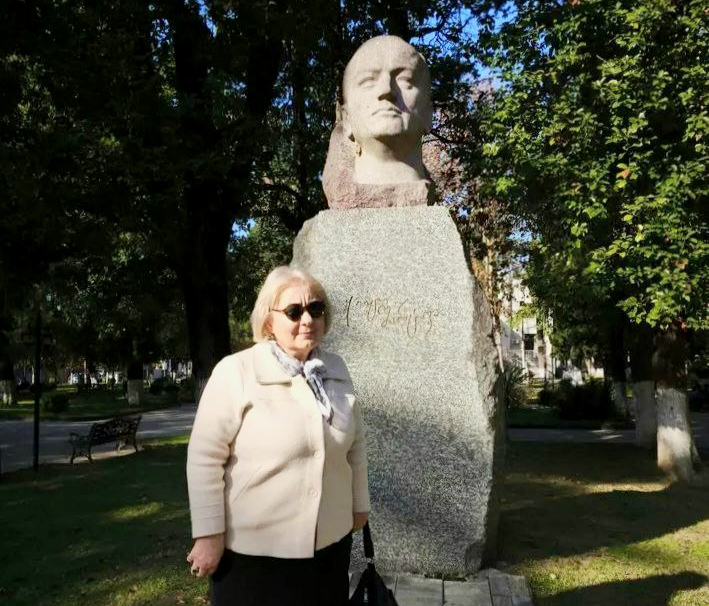
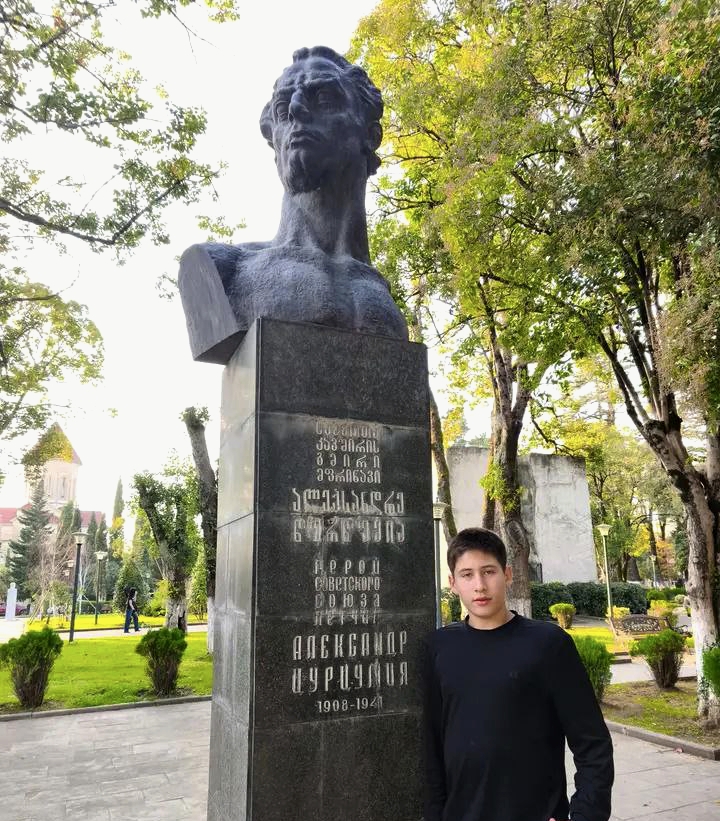
The drive from Tbilisi to Senaki takes four hours by car and five by train. November was unusually warm, with the streets crowded and the parks—true green oases—overflowing. As of 2021, Senaki's population was 34,300. It is here that the iconic Nokalakevi Fortress, with its stunning views, is located, as well as the Shkhepi and Menji Fortresses. Senaki is a city with amazing cultural heritage sites, a rich history, and a theater. The country's first educational institutions opened here, one of which was attended by the future literary classic Konstantin Gamsakhurdia. Arnold Chikobava, Zhiuli Shartava, Hero of the Soviet Union pilot Alexander Tsurtsumia, and many others were also natives of Senaki. It's worth noting that Russian can be heard in the city center. A school with a Russian section still operates here, with over 1,000 students in grades 1 through 12. Residents note that the students in the Russian section are primarily Georgians. Incidentally, this year's winner of the Georgiapress International Literary Video Competition "I'm Here," dedicated to Alexander Pushkin, was 13-year-old Nikita Siordia, a student at a local school. He is not only a passionate poet but also a successful athlete. Nikita was also invited to a meeting of the Russian diaspora in Senaki, organized by legal scholar and public figure Larisa Agabalaeva at the popular café "Appetito" on Ninotsminda Street. The table was decorated with national dishes of both nations: khinkali and pelmeni, khachapuri and blini. Participants shared their life stories, how different cultures and traditions come together under one roof, and how, in mixed marriages, differences unite and create unity.
Lyudmila Vadakariya came to Georgia from Belarus many years ago. "I was born in Russia, in the city of Sverdlovsk, and was brought to Belarus as a child. My aunt, my mother's sister, lived in Senaki, and after finishing 11th grade, I visited her, where I met my future husband, Yura. I don't speak Georgian perfectly, but that didn't cause any problems. There aren't many of us Russians left in the region, and we try to stick together."
Antonina Shcherbakova-Siordia, originally from Voronezh, came to Georgia in 1974. She married a Georgian and settled in Senaki. She explains that she has never encountered Russophobia in the country. She has four children, and the family is bilingual. “I've gotten used to it; I like everything here. Georgians have never harassed us. We are respected,” says Antonina Fedorovna, noting that she can always turn to legal expert Larisa Agabalayeva for support on many issues:
“We've known Larisa for a long time. No matter what we ask or request of her, she never refuses. Her public activities were combined with her work in government, education, and politics. Incidentally, she worked for many years in the Ministry of Defense – the Armed Forces of the USSR.”
Medea Tsigvava, speaking with us, noted that she knows firsthand about Agabalaeva's selfless support for her compatriots:
"I've known Larisa for several decades. She has a law degree. I've always admired her professional and worldly mindset, her insight—she comes from a military family, which also contributed to her intellectual development. She has distinguished leadership qualities. Sincerity, love for one's neighbor, loyalty, and assistance to those in need—both physical, moral, and material—are paramount to her. I can cite numerous examples. While participating in the commission for war victims, she actively advocated for the interests of victims and for real and legal compensation. In 2012, a completely innocent, very honest young Russian man was unlawfully accused of possessing weapons. He was my neighbor and had come home from Batumi for two days for New Year's. I asked Larisa to protect his interests, and I remember her selfless work in this regard. The victim's family was very poor, and our friends raised money to send Larisa to Tbilisi. She appealed to parliament, the Human Rights Committee, the Prosecutor General's Office, the Ministry of Internal Affairs, and the Ombudsman. Upon her return, Larisa returned the unspent 100 lari out of the 200, surprising us once again.
Ineza Bagaturia also notes that Russian-speakers have a great friend in Agabalaeva, who provides assistance, including with legal matters: "Larisa is highly respected in Senaki. She puts aside her own affairs and takes on the problems of others. Her compatriots can always rely on her. Larisa was with me in court and helped me win my case."
A Walk Through Senaki
Agabalaeva agreed to be our guide through Senaki. Interestingly, the name of the town means "cell" in Russian.
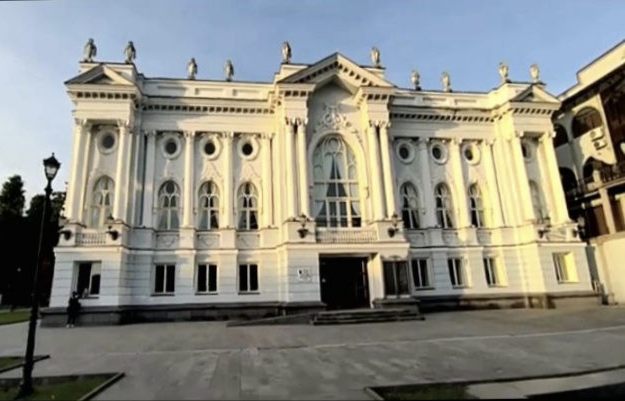
In ancient times, "senaki" also referred to a small village church where a monk or priest performed religious rites. While strolling through town, we found ourselves across from the Akaki Khorava State Drama Theater. The city's theatrical life has a long tradition. In 1918, in the building that now houses the Egrisi Hotel, the Sanikidze brothers built a three-story hotel with a theater stage and auditorium. That same year, the play "Betrayal" was staged there, starring the young Akaki Khorava, captivating the audience. In 1938, a decision was made to create a collective farm theater in the workers' club building (now the Akaki Khorava Theater). In 1949, the Senaki Theater was liquidated. After the closure of the State Theater, another drama company was created in the district House of Culture, which existed until 1959. From 1959 to 1990, the People's Theater operated. In 1990, after 40 years, the state theater was revived in Senaki. David Khinikidze became its first director and artistic director, and Honored Artist V. Salakia served as its director.
It's worth noting that the restored medical center will soon be unveiled to the residents of Senaki in its updated form. Georgian Health Minister Mikheil Sarzhveladze and Senaki Municipality Mayor Vakhtang Gadelia recently inspected the progress of the reconstruction of the maternity hospital in Senaki. As part of the project, using local budget funds, the maternity hospital building was completely renovated and improved, and decent working conditions were created for the medical staff. Plans are underway to equip the facility with modern medical equipment. Thanks to this project, a maternity hospital with traditions and history has been preserved in the town.
The residents of Senaki are also proud of the 840-year-old sycamore tree, whose lifespan recently ended when the tree fell under the weight of its nearly 100 years. The distinguished Georgian writer Konstantin Gamsakhurdia praised the plane tree in his childhood memoirs, telling how one night he and his brother hid under its drooping branches. Some residents said, "Now it's time to plant a new tree," while others believe that even the old plane tree could sprout.
Recently Added Articles
Ambassador of Belarus to Georgia attends opening of “Belarusian House” chain store

World Bank Group-organized Regional Connectivity Forum "Middle Corridor: Next Stage"
The scale is impressive—Georgian participants in MFM-2026 shared highlights from the festival