



World Bank Group-organized Regional Connectivity Forum "Middle Corridor: Next Stage"
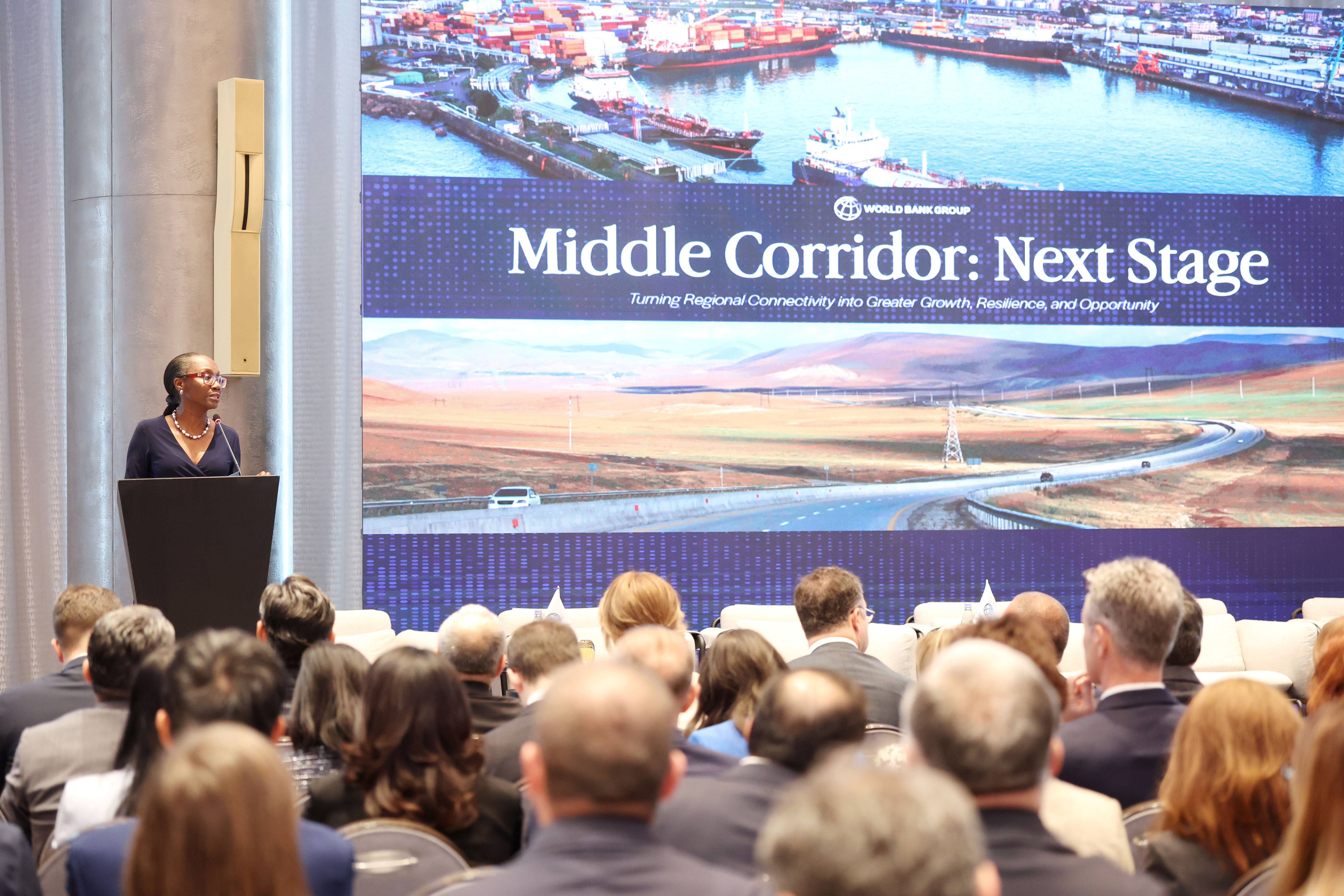
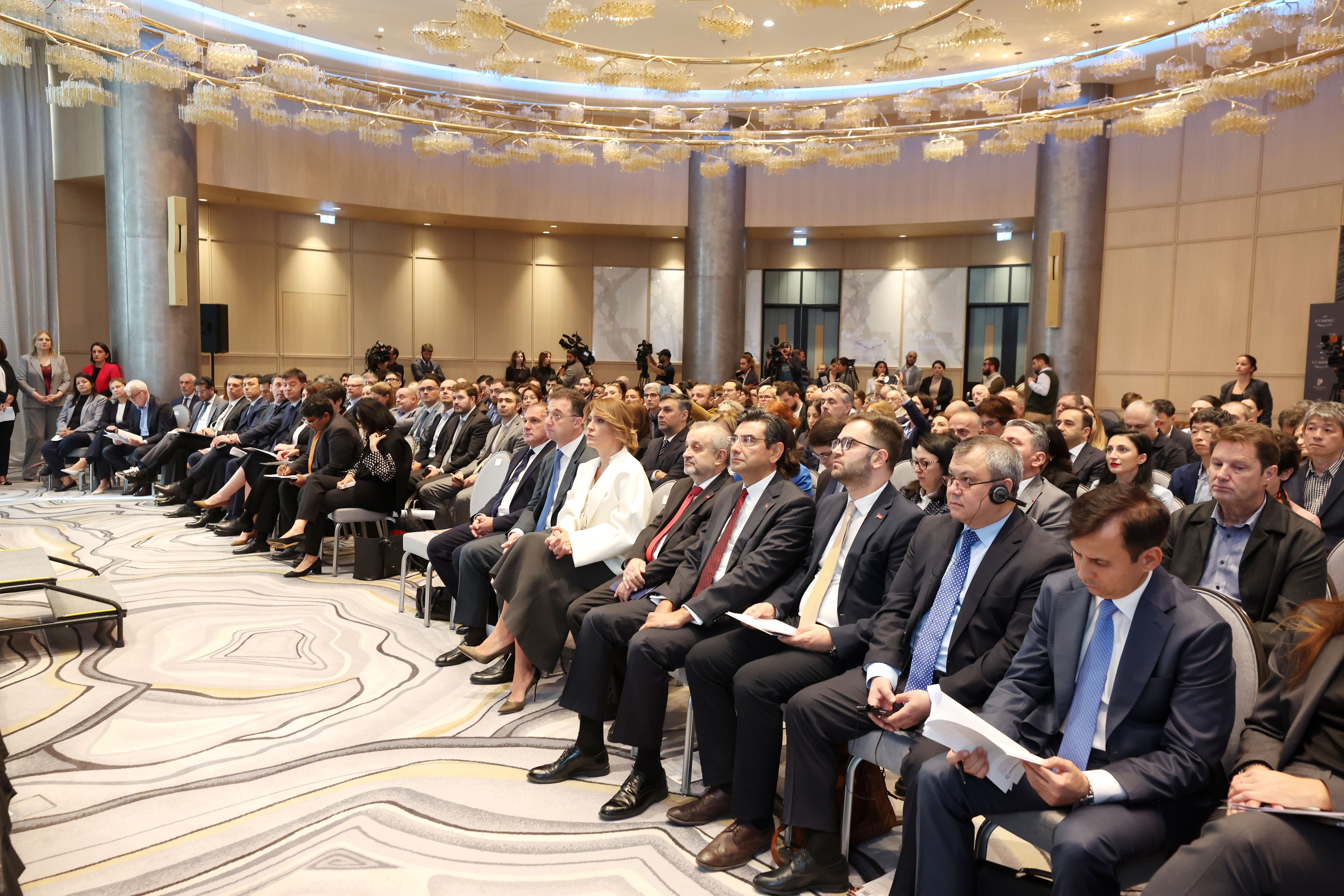
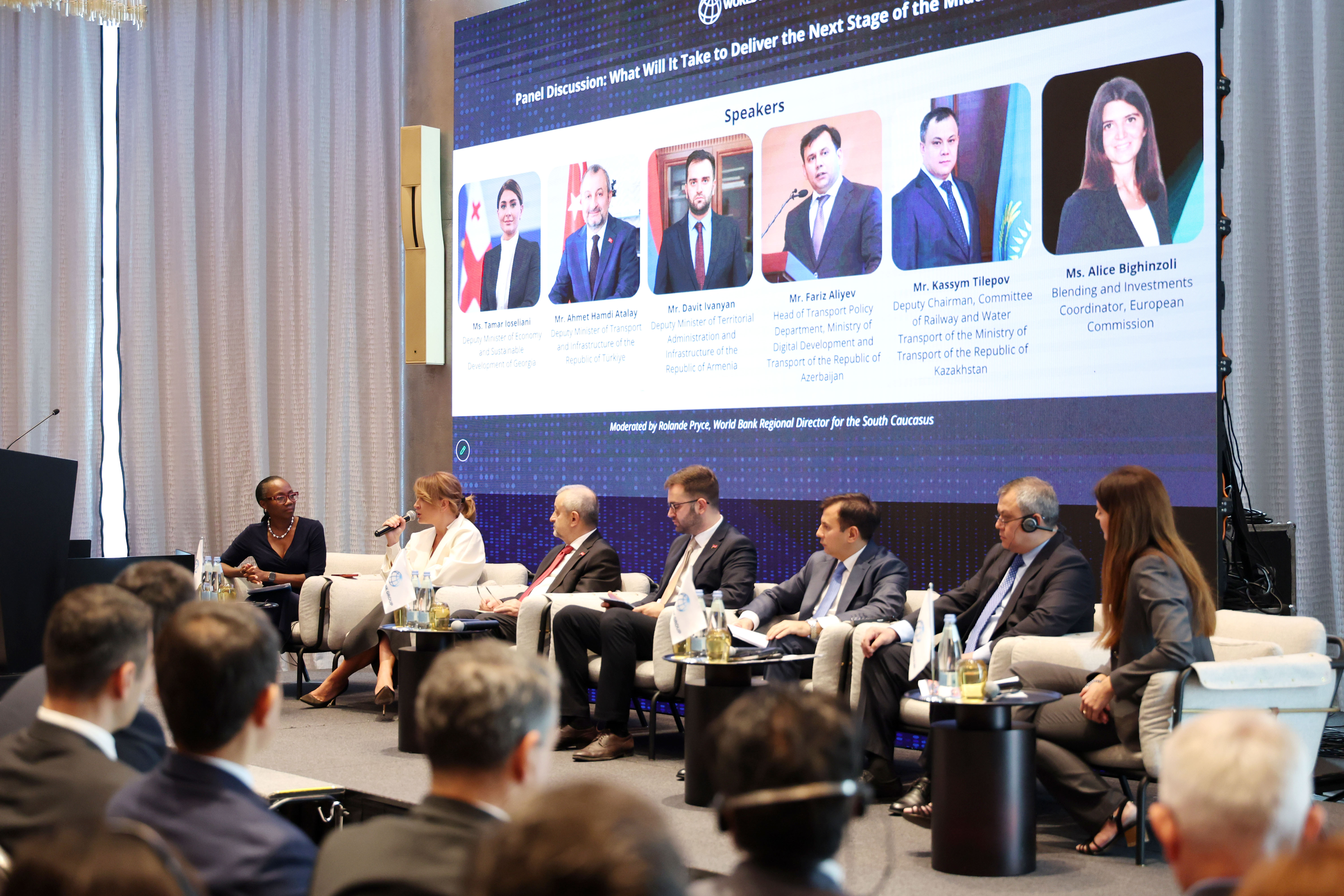
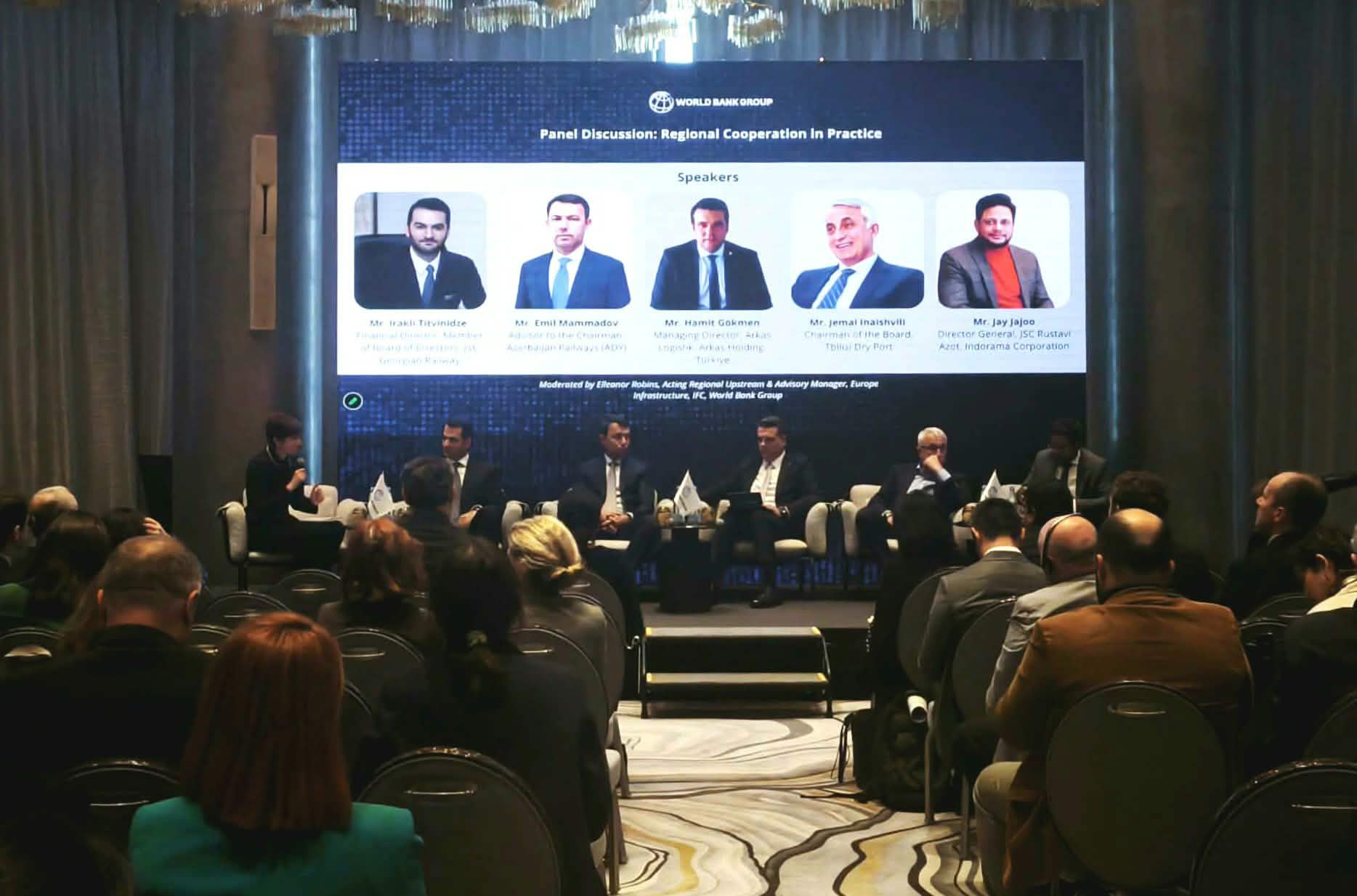
The World Bank Group convened the Regional Connectivity Forum - Middle Corridor: Next Stage, bringing together government officials and private sector representatives from Georgia, Armenia, Azerbaijan, Kazakhstan and Türkiye, along with development partners and other key stakeholders to discuss opportunities to realize the Middle Corridor’s full economic potential.
The forum marked the official launch of the World Bank Group’s flagship report, Integration: World-Class Trade Logistics Along the Trans-Caspian Transport Corridor. The report provides a comprehensive assessment of the corridor’s trade flows, infrastructure, logistics performance, and policy challenges, while outlining a prioritized agenda for governments and private sector stakeholders. Building on the World Bank Group’s 2023 report, Middle Trade and Transport Corridor: Policies and Investments to Triple Freight Volumes and Halve Travel Time by 2030, the new publication examines nine countries and evaluates how coordinated investments, policy reforms, and stronger institutions could transform the corridor into a more competitive, resilient, and growth-enhancing trade route by 2040.
Key Messages and Recommendations
The report finds that the Middle Corridor has the potential to become a major driver of trade, economic diversification, and regional integration between Asia and Europe, but its future success will depend not only on building new infrastructure but also on improving corridor performance.
The analysis suggests that demand for the corridor could grow substantially over the next 15 years if countries work together to invest in infrastructure and expand services.
While substantial investments are already underway, the next stage of development requires faster and more reliable services, stronger trade facilitation, greater digitalization, and deeper cross-border collaboration. These improvements are essential for attracting higher-value containerized trade, strengthening supply chain resilience, and unlocking economic opportunities across the region. Should they be attained in conjunction with infrastructure investments, the report finds that overall corridor volumes could quadruple by 2040 and travel times could be reduced by two-thirds. In particular, in this scenario, the Middle Corridor could increase total freight volumes by 3.6 times, raise GDP by 3.3 percent, and boost employment by 2.9 percent across host countries by 2040.
To fully realize the Middle Corridor’s economic potential, the report calls for the following actions:
- Strengthening transport institutions, particularly railway, port, and shipping operators, through improved governance, financial sustainability, and greater mobilization of private capital.
- Simplifying cross-border procedures by streamlining transport, customs transit, and trade documentation and accelerating digital solutions.
- Advancing corridor-wide digitalization through interoperable systems that improve visibility, coordination, and service delivery while protecting national data sovereignty.
- Developing integrated rail and shipping services to deliver faster, more reliable, and commercially attractive transport solutions.
- Strengthening regional coordination and private sector engagement through enhanced performance measurement, policy dialogue, and public-private collaboration.
What the Findings Mean for Georgia
Strategically located between the Caspian and Black Seas, Georgia already plays a pivotal role in the Trans-Caspian Transport Corridor (TCTC) and will play a major role in shaping its future. The report’s regional findings point to a clear agenda for strengthening the country’s gateway role: combine targeted rail, road, port, and logistics investment with reforms that make freight movements faster, more predictable, digitally enabled, and better coordinated across borders and operators.
The report’s findings point to substantial benefits for Georgia from TCTC development, including projected GDP growth of 3.61%, employment gains of 0.79%, and increased import-export growth by 2040. These findings suggest that Georgia is well positioned to benefit from a more integrated and better-performing corridor network.
The next stage of the Middle Corridor is not only about building more infrastructure. It is about making the entire route function as an integrated logistics system. For Georgia, this means translating its strategic location into long-term economic value through reliable transport services, stronger institutions, digital connectivity, private investment, and deeper regional collaboration.
The World Bank Group’s commitment to the Middle Corridor development:
The World Bank Group currently has US$7 billion in total commitments under implementation across the Middle Corridor. These investments are helping mobilize an additional US$11.5 billion in private capital, cofinancing from development partners, and government financing. A further US$1.2 billion is under preparation for FY27 delivery.
In Georgia, the World Bank has co-financed successive phases of the East-West Highway (EWH) Improvement Program, supporting upgrade of the country's main transit artery. This long-running initiative has significantly contributed to reducing transport costs and improving connectivity within the country as well as along the Middle Corridor. The ongoing Kakheti Connectivity Improvement Project, approved in March 2022, is extending these gains to the Tbilisi-Bakurtsikhe-Lagodekhi highway corridor in the Kakheti region. Building on this program, the US$372 million Trans-Caspian Transport Corridor - Georgia Accessibility and Transport Enhancement (TC-GATE) Project, approved in June 2026, targets remaining infrastructure bottlenecks along the corridor and supports rail sector reforms and modernization.
Recently Added Articles
Ambassador of Belarus to Georgia attends opening of “Belarusian House” chain store
World Bank Group-organized Regional Connectivity Forum "Middle Corridor: Next Stage"

The scale is impressive—Georgian participants in MFM-2026 shared highlights from the festival