



Preserving memory
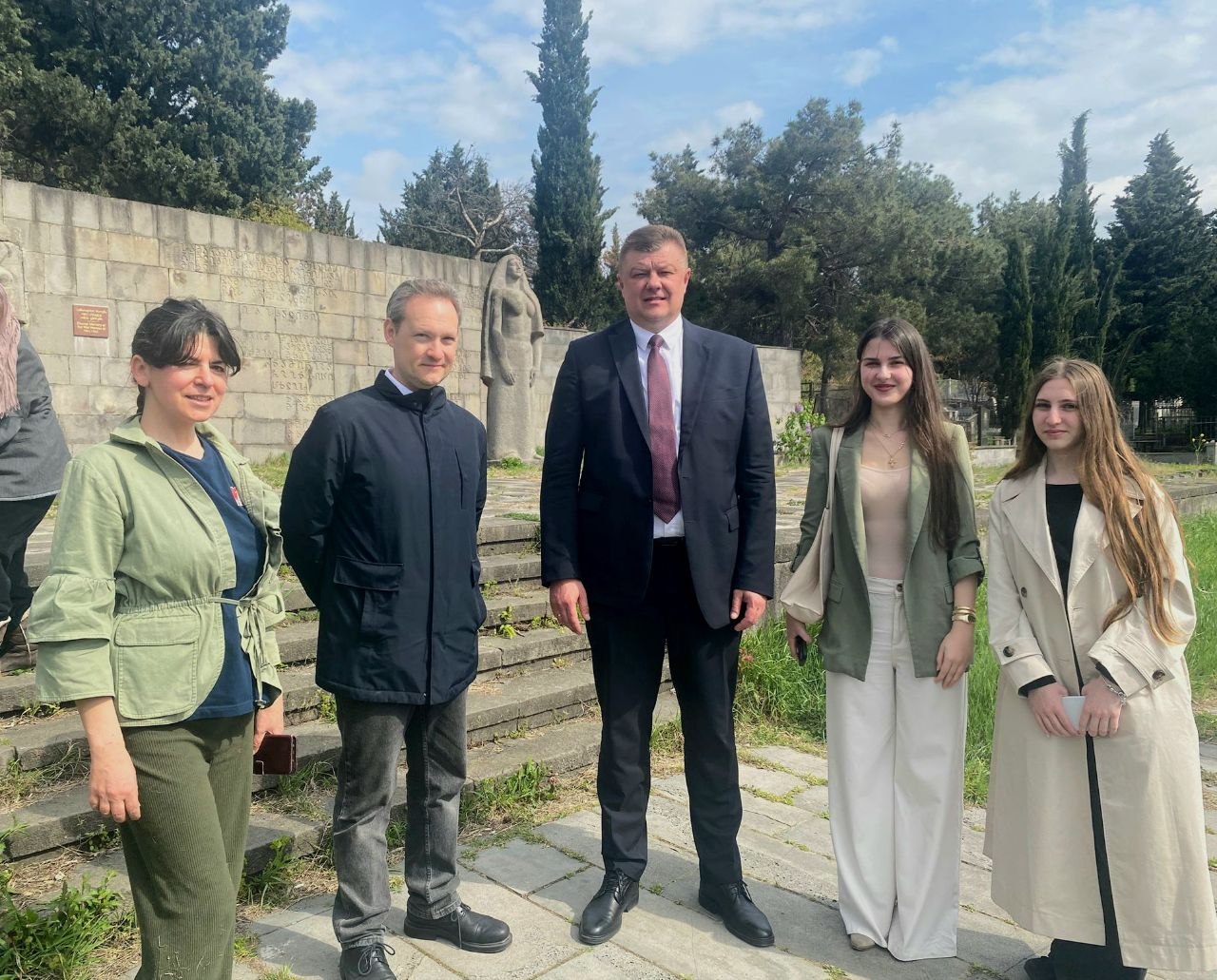
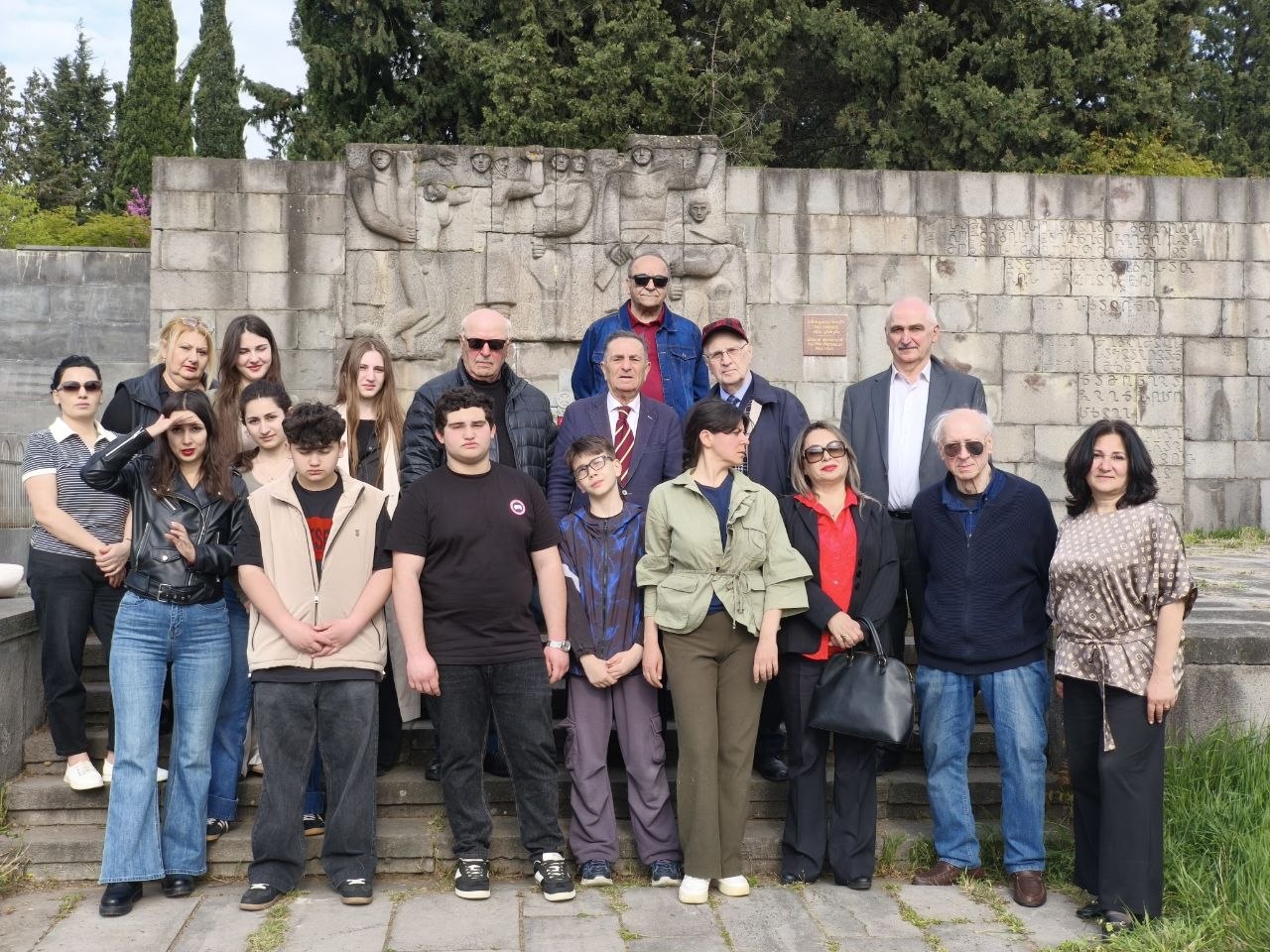
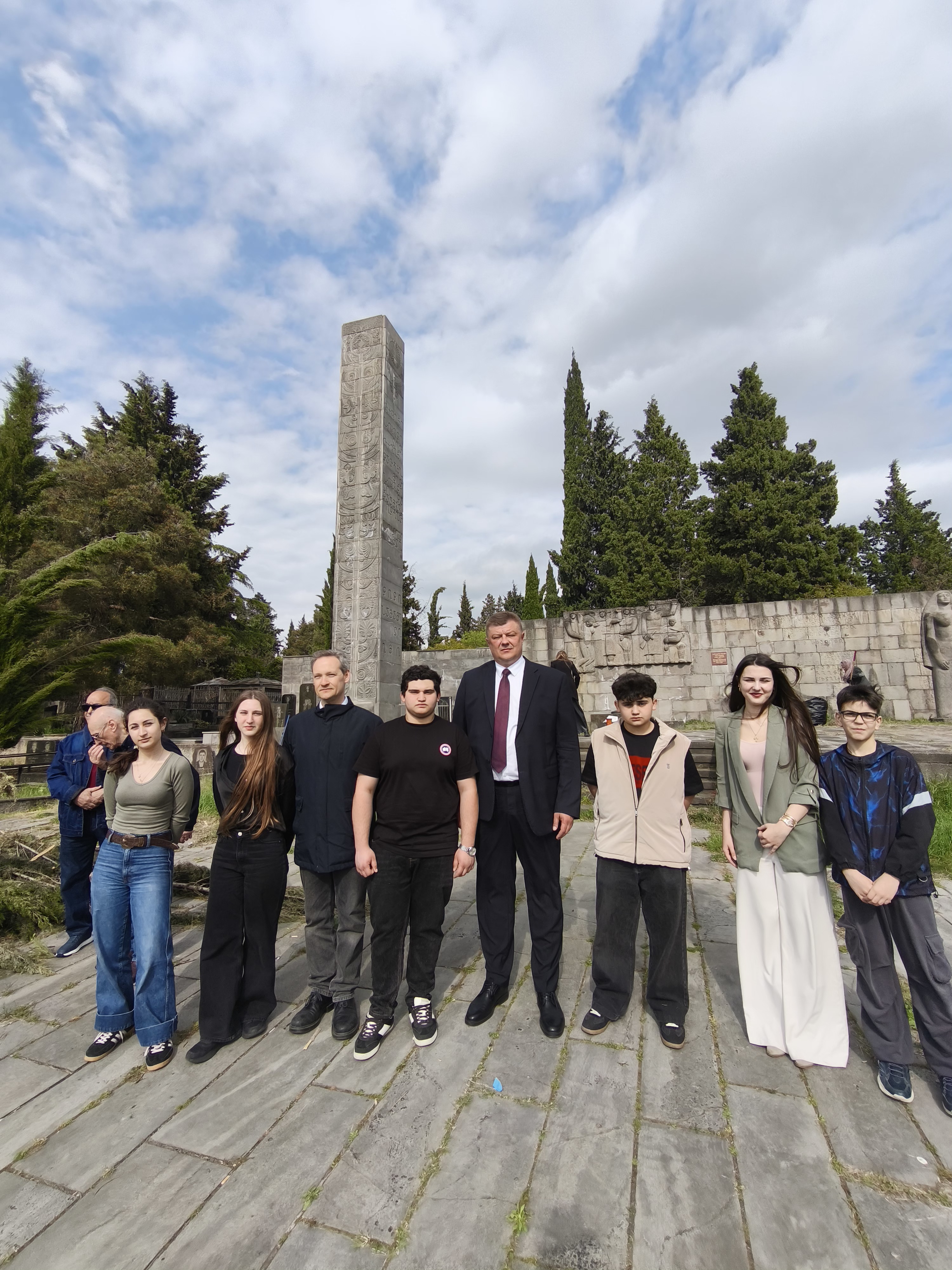
Georgian schoolchildren and youth, participants of the VFM projects, the "Train of Memory," and the Mirza Gelovani Literary Competition, took part in the cleanup of the military grave at the Kukiya Cemetery.
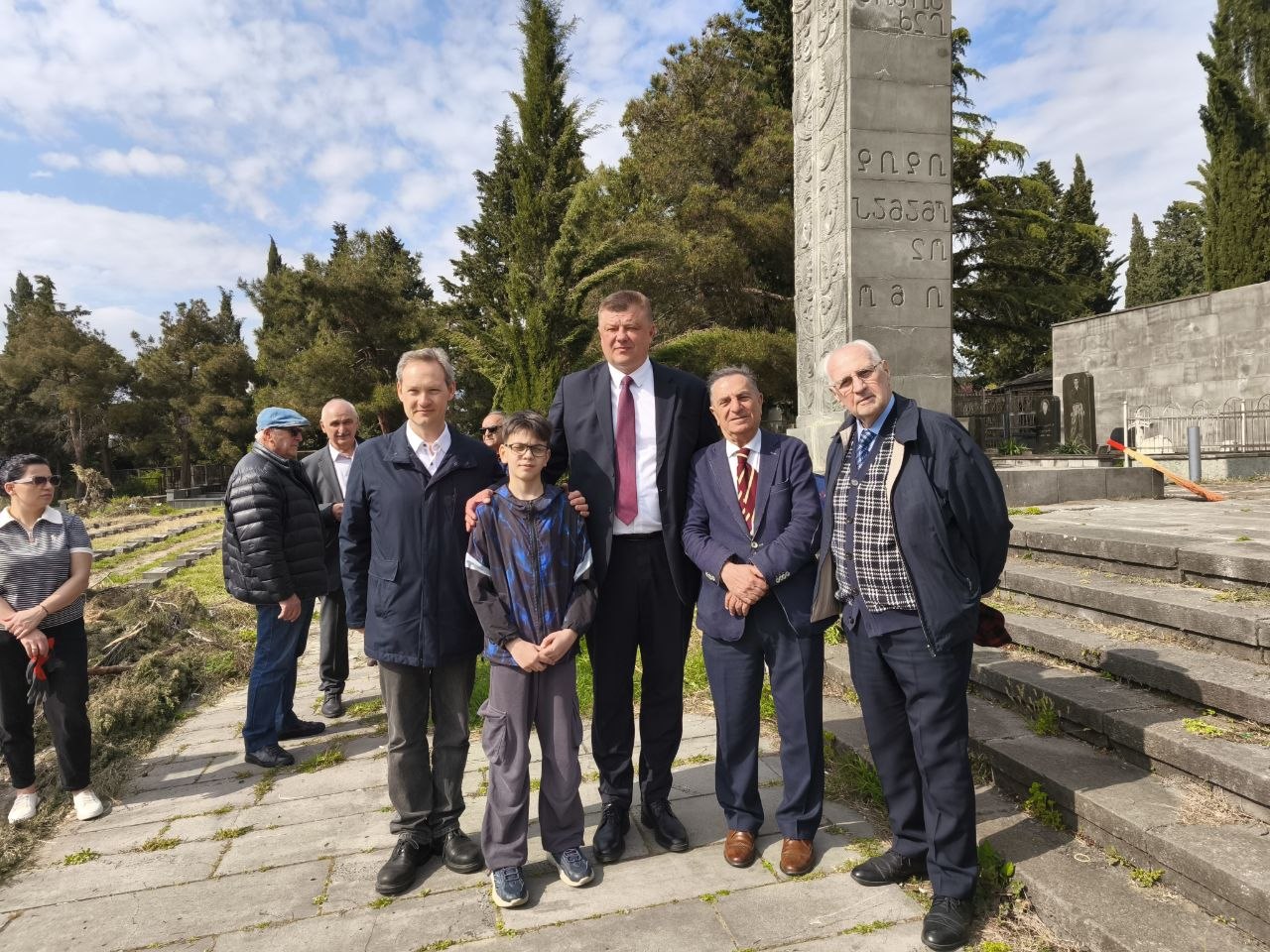
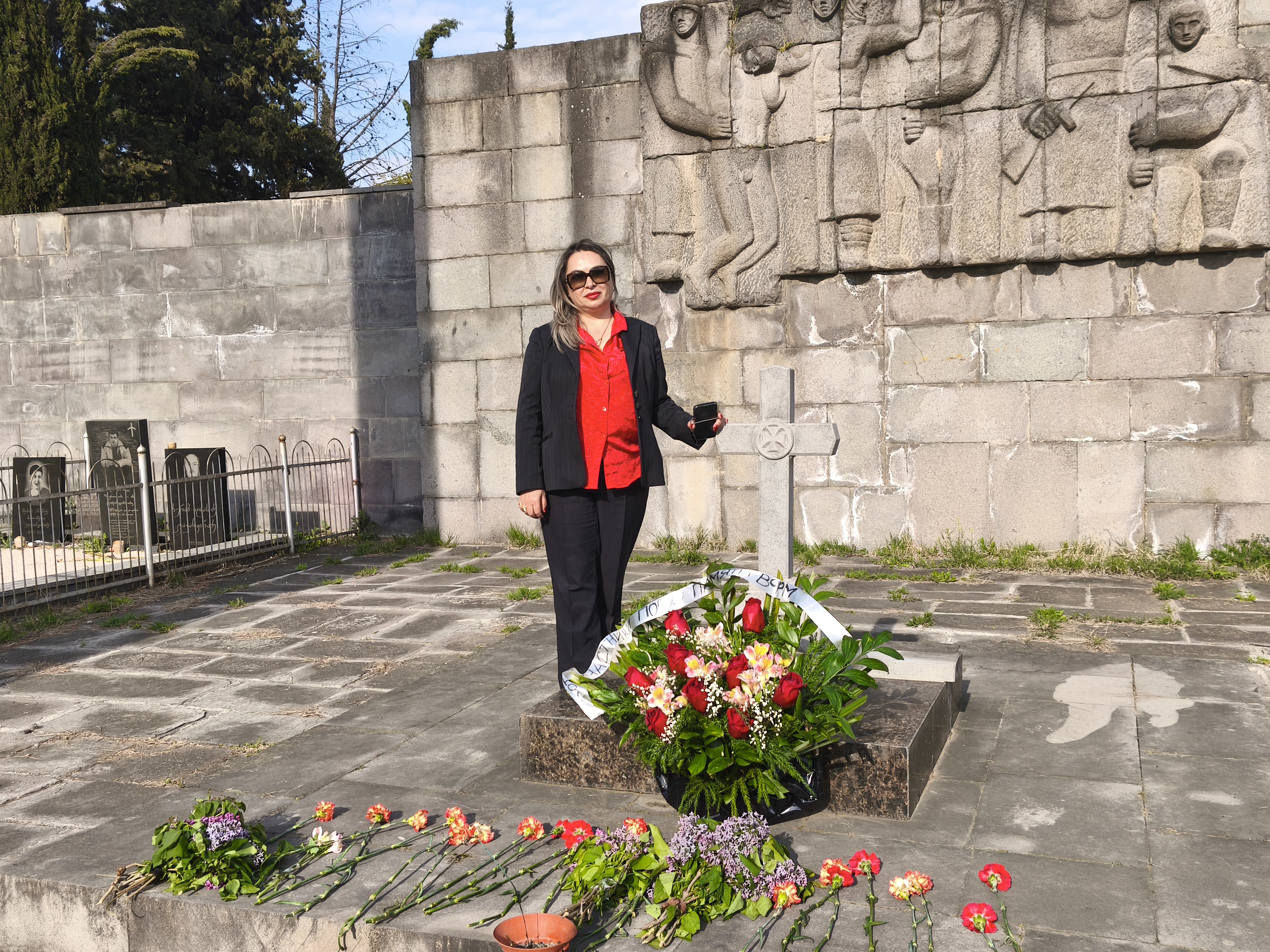
The Kukia Cemetery in Tbilisi, dating back to the Second World War, preserves the stories of those bygone years and serves as a reminder of the heavy price soldiers paid to bring about victory. Soldiers who died in Georgian hospitals from wounds sustained at the front were laid to rest here. The fallen came from diverse ethnic backgrounds; to honor heroes from the 15 republics, fifteen stone obelisks and a memorial monument have been erected within the military burial grounds. Kukia also became the final resting place for those who perished during the defense of the Caucasus. This site plays a vital role in preserving historical memory. Nikolai Rogashchuk, Ambassador Extraordinary and Plenipotentiary of the Republic of Belarus, participated in this significant event marking Victory Day—organized by the NGO GeorgiaPress under the leadership of Miranda Oganezova—and warmly greeted the participants, both young and old. Joining the event were representatives of the Council of Veterans of Georgia—Colonels Yasha Kharaishvili and Murman Ramishvili; Honorary Citizens of Tbilisi—legendary director of the "Pioneer-Film" children's studio Grigol Chigogidze and former MP and editor of the *Vrastan* newspaper Van Baiburt; leaders of the Charitable Union for the Revival of Cossack Communities Nikolai Mandebura and Vagif Jafarov; political scientist Natali Argvliani; Karina Barsegyan; and others.
During the event, schoolchildren who had visited Russia and Belarus’s "Hero Cities" and "Cities of Military Glory" for the first time last year shared their impressions with Nikolai Rogashchuk, Ambassador of the Republic of Belarus, and Dmitry Olisov, Head of the Russian Interests Section in Georgia. Nikolai Rogashchuk emphasized the importance of maintaining military burial sites on an ongoing basis, rather than just in the lead-up to May 9 or June 22: "It was a pleasure speaking with the young people who took part in the 'Train of Memory' cultural and educational project last year; they were truly inspired. I believe those participating this summer will also return with a sense of joy from having visited our countries, for young people are our future, and they must remember the suffering caused by the Great Patriotic War of 1941–1945. We still hold onto the memories shared by veterans. Unfortunately, few people today likely interact with living witnesses of that terrible war. Therefore, we must pass on this memory and the knowledge we possess to the new generation, so that they may carry forward the history of that horrific conflict from the last century."
The Belarusian diplomat noted that this event is not only a tribute to the past but also an important step in preparing young people to participate in international historical and patriotic initiatives. Of particular significance is the participation of schoolchildren who will represent Georgia in 2026 in the "Train of Memory" project—an initiative supported by the Council of the Republic of the National Assembly of Belarus and the Federation Council of the Russian Federation that brings students together to study history. "This is a wonderful event, and it also offers an opportunity to interact with the young people. I believe the 'Train of Memory' project—and the route they will travel—will remain in their memories for a lifetime. By preserving the memory of the past, we shape a responsible future."
The Belarusian ambassador also expressed his gratitude to the event's organizer. Together with diplomats and public figures, the schoolchildren laid a wreath and flowers at the memorial.
A Thread of Continuity
Grigol Chigogidze, Director of Pioneer-Film, took part in the "We Stand for Cleanliness" event alongside a student from the Palace of Student Youth. Notably, in 1975, Chigogidze participated in the reburial of the remains of the Unknown Soldier—brought from Kerch to Vake Park in Tbilisi—and organized the Tbilisi-Brest motorcycle rally.
"I really like this initiative—the idea that we should care for military burial sites. I am the son of a Great Patriotic War veteran. My father died in the war in September 1942, and I was born a few months later. In short, we must look after these places. I came here with my student, Gabriel; together, we must tend to the graves of our heroes."
Van Baiburt is confident that the number of participants in the campaign will grow next year: "My thanks go to the families raising these children. I also ran into a friend of mine here—Vagif Jafarov, an Azerbaijani. These people remember their roots. God willing, there will be no wars in the future." Levan Dolidze, an Honored Journalist of Georgia who has published eight books on the Second World War and interviewed Marshals Vasilevsky and Baghramyan, was unable to attend the event due to health issues but asked that his greetings be conveyed to the participants: "It is truly admirable. In years past, we always visited military burial sites, and this thread of continuity must not be broken. I have dedicated over 60 years to the subject of the Great Patriotic War, working out of sheer enthusiasm. I never asked for royalties for my books. Today, many people use my materials and photographs, and some even plagiarize them." "The theme of the Great Patriotic War is the most important one for me."
Earlier, Galina Mikhailovna Shishlo from Minsk found information online indicating that her uncle was buried at the Kukia Cemetery; she asked Levan Dolidze to locate the grave.
"I didn't find the grave; about 20 percent of the headstones are broken. I photographed everything and personally took the photos to Minsk," Dolidze recounted.
Approximately two thousand soldiers who died of their wounds in hospitals are buried at Kukia, which is divided into a new and an old cemetery. According to Tbilisi residents, the old Kukia Cemetery holds the grave of David Vashakidze, who died in 1943. Upon learning of her son's death, his mother sold her house, buried him, and took up residence at the cemetery herself. His grave features an image of a wounded, bleeding soldier. The fallen soldier was laid to rest in a glass-covered tomb accessible by a staircase; she slept on a cot right next to it. This went on for years. She was eventually buried literally upon her son's chest, and the grave was covered with earth.
Representatives of the State Service of Veteran Affairs also visit the war cemetery and, together with employees of the "Hermes" company, carry out cleanup operations.
It is worth noting that this year, staff from the Russian Federation Interests Section in Georgia carried out significant improvement work at the Kukia Cemetery. Over the course of several days, diplomats tidied up the areas surrounding the war graves, mowed the grass, repainted the self-propelled artillery unit (commonly referred to by locals as a "tank"), and removed dozens of bags of trash.
Cataloging Heroes' Graves: A Key Element
In the run-up to Victory Day, the cataloging of graves at the Kukia military burial site—an initiative announced two years ago—has been completed. This project is a crucial element in preserving both the memory of individual families and historical memory as a whole. The survey was conducted by journalist Miranda Oganezova without any financial backing; the list of soldiers' names, accompanied by photographs of the graves, will be made publicly available online.
The idea for the project emerged five years ago when, following one of her articles, Miranda received a letter from Perm sent by the descendants of a soldier who had died in a Tbilisi hospital. They provided a photograph of the soldier, letters from the front, and the official death notification from the hospital, asking her to locate his grave at the Kukia cemetery. Since the archives had been lost, the journalist decided to manually record every name from the headstones. Unfortunately, approximately twenty percent of the markers had not survived. Had this work been undertaken ten or fifteen years earlier, it would have been possible to memorialize a greater number of soldiers.
"Komsomolskaya pravda v Gruzii"
Recently Added Articles
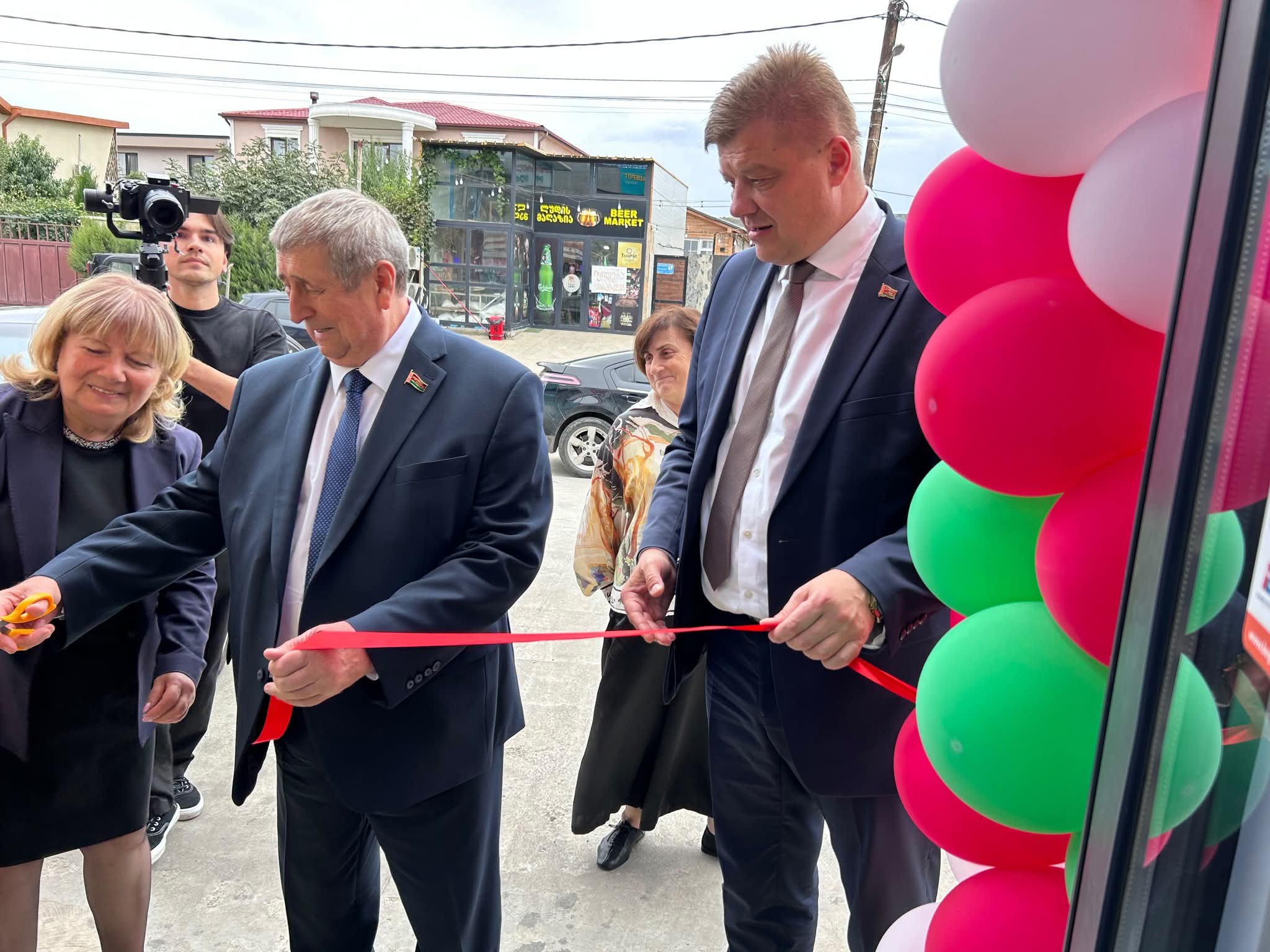
Ambassador of Belarus to Georgia attends opening of “Belarusian House” chain store

World Bank Group-organized Regional Connectivity Forum "Middle Corridor: Next Stage"
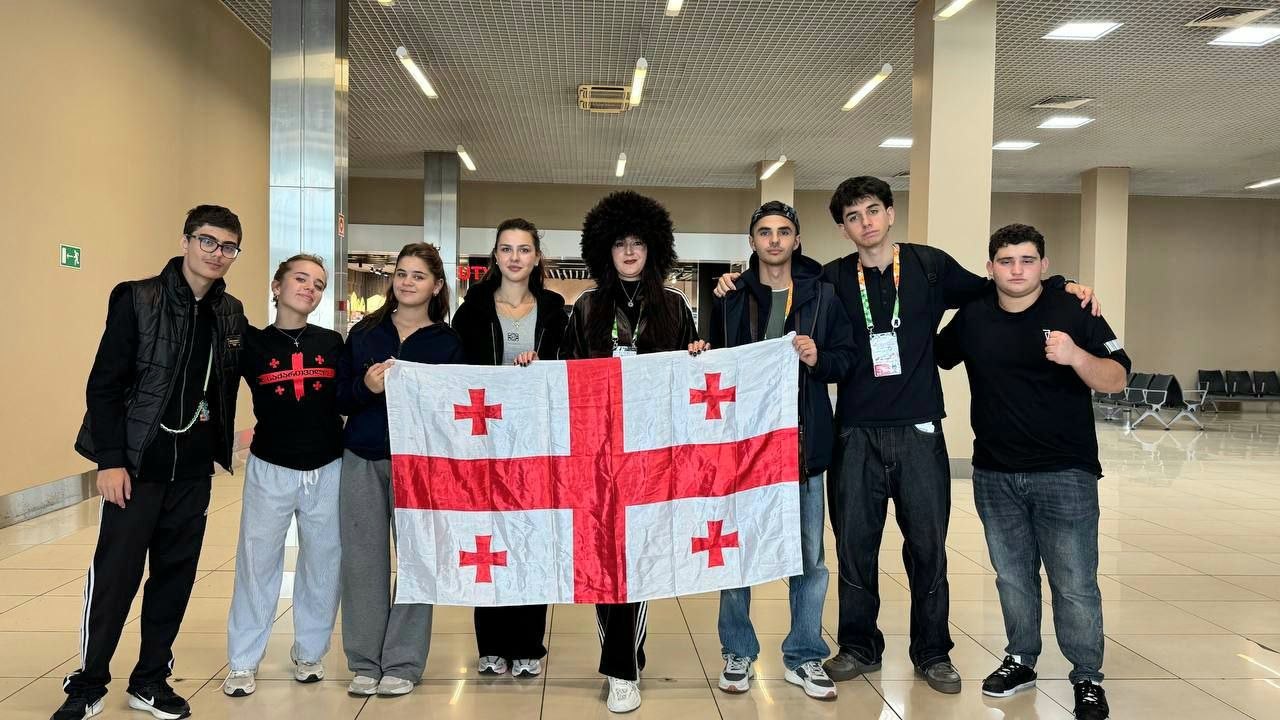
The scale is impressive—Georgian participants in MFM-2026 shared highlights from the festival